

April 30, 2026
MoleMap Team
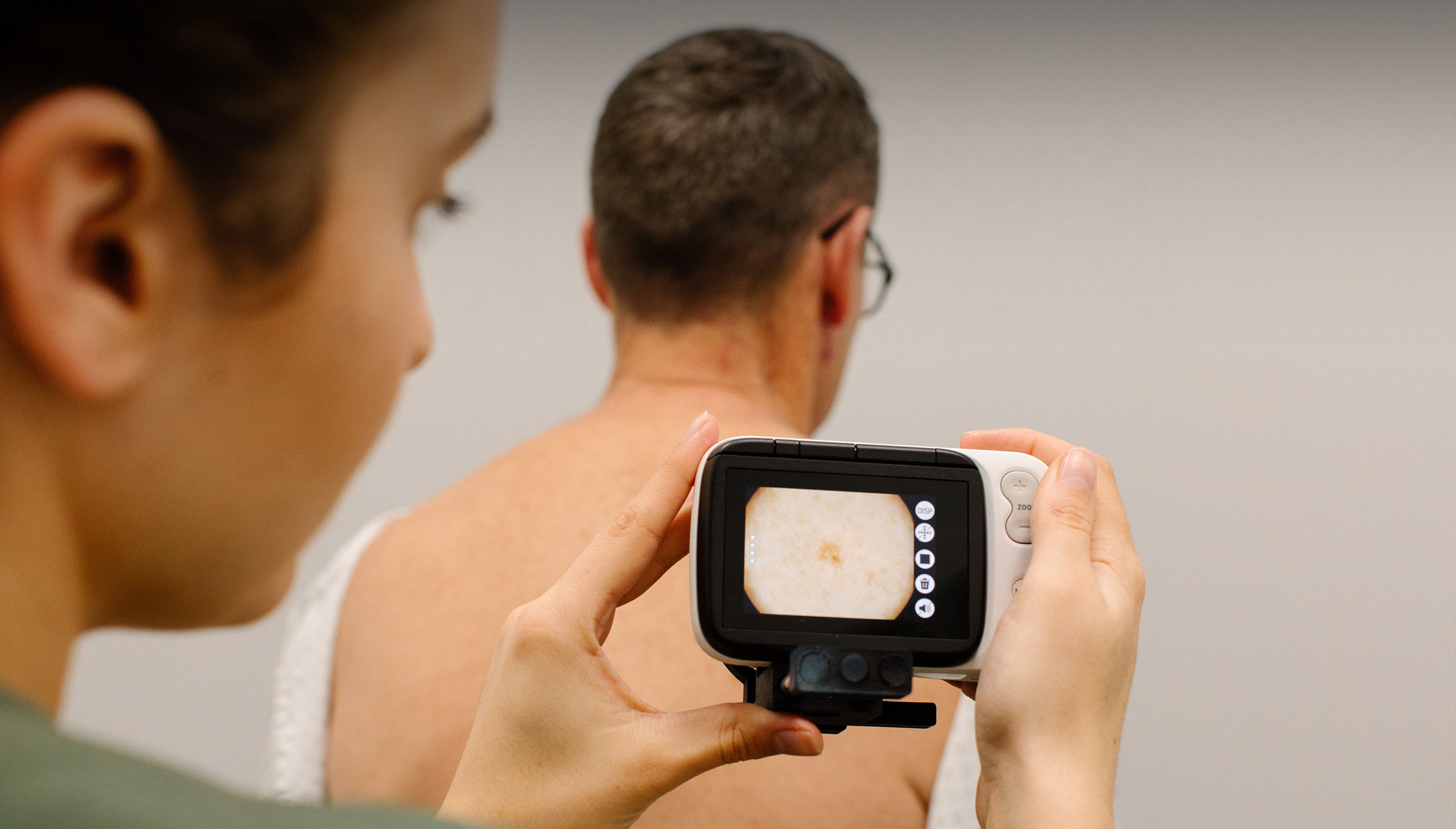

“We see patients every week who only come in because a partner or friend said, ‘That mole doesn’t look right,’” says Dr Lorna Claydon. “Often that observation of a spot that ‘stands out’ from the others is what catches a melanoma early.”
Your skin is constantly changing; learning what’s normal for you - and what’s not - is the first line of defence.
Skin cancer isn’t just one disease. It’s a group of conditions that develop when skin cells grow abnormally.
“People think they’re looking for something dark and obvious,” Dr Claydon explains. “But many cancers are pink, itchy, or just look different to everything else on your skin.”
Between professional checks, Dr Claydon encourages everyone to SCAN their skin. Check all over your body and look for any spots that are:
S - Sore: Spots that are itching, bleeding, tender or just not healing within 6 weeks.
C - Changing: Notice any shift in size, shape, colour, or texture. A mole that evolves is a red flag.
A - Abnormal: The “ugly duckling” - the spot that looks or feels different from the rest. It might be darker, raised, or just catch your eye.
N - New: A new spot always deserves attention, particularly after age 40. Two-thirds of melanomas start this way.
“If it’s new, changing, or just doesn’t fit, get it checked,” she says. “It’s as simple as that.”
You’re in a higher-risk category if you:
Even if you don’t have any of the risk factors above, regular skin checks are recommended for everyone.
“Even if everything looks fine, a baseline creates a record of your moles,” she notes. “A Full Body MoleMap makes it so much easier to see when something new appears or changes over time.”
When caught very early, melanoma survival rates are over 905 percent. Once it spreads beyond the skin, treatment becomes far more complex and risky.
“Technology lets us compare images over time,” Dr Claydon says. “It’s a game-changer for finding melanomas early.”
“Skin cancer only happens to older people.”
False. While skin cancer is more frequent in older adults, melanoma can occur at any age—even in young adults. Everyone should protect their skin and check for changes regularly, regardless of age.
“It’s safe in winter or on cloudy days.”
UV levels remain high through much of the year. If the UV index is 3 or above, your skin can still be damaged and sun protection should be used.
“Dark skin doesn’t get skin cancer.”
Everyone can. Darker skin offers some natural protection but not immunity - and diagnoses are often delayed.
“If it doesn’t hurt, it’s fine.”
False. Most melanomas are painless. Instead of waiting for pain, watch for changes in size, shape, or colour, or symptoms like itching or bleeding—these are more important warning signs.
A Full Body MoleMap is a thorough, accurate and advanced skin check service that offers a triple-check guarantee – every individual spot that shows signs of concern is dermascopically imaged by our trained melanographers, analysed by AI, and then sent to a dermatologist for diagnosis. These images become a reference for future visits, making it far easier to spot new or evolving spots.
Early action is the difference between a small scar and major surgery. The sooner a cancer is found, the simpler the treatment and the better the outcome. Your skin is with you for life - protect it like you protect your heart or your lungs.
✔ Know your baseline.
✔ Use the SCAN method monthly.
✔ Get a professional check at least annually (or every 6 months if high risk).
✔ Protect your skin daily with SPF 50+, clothing and shade.
✔ Act early - don’t wait and see.
“You’ve only got one skin for life,” says Dr Claydon. “Take care of it - it’s your best outfit.”


Southern Cross Affiliated Provider for eligible treatment services at select clinics